About 15 teenage girls hanging out at a park bench, singing loudly together. Afternoon.
”POST BOX NUMBER: THREE FOUR SEVEN, THREE THREE HUNDRED ONE TAMPERE TEN!”
***
Auditory culture, soundscape ethnography, academic babble // Kuultavaa kulttuuria, äänimaisemaetnografiaa, akateemista juttua
About 15 teenage girls hanging out at a park bench, singing loudly together. Afternoon.
”POST BOX NUMBER: THREE FOUR SEVEN, THREE THREE HUNDRED ONE TAMPERE TEN!”
***
”Listening in public” is back after a six year hiatus! It is a series of tiny posts originally published in a blog of the same name, with John Kannenberg. The idea was to laconically write down things we overheard while walking, commuting, spending time in space that would be understood as “public”. Or as the blurb said: “Conversations overheard by two people in different countries”. For me these are beginnings of mundane stories that feed my imagination. What ever are the situations or histories that are behind these small conversations, it’s up to you to imagine. They are written as verbatim as possible even thought they are translated into English (with variable success).
For previous posts see here: https://users.utu.fi/mlkyto/category/listening-in-public/]
***
Two teenage girls on a train, playing mobile games.
It’s crashing!
Oh no…!
It can’t be crashing now?!
No…
I mean really…
Yea…
But this is nice, look, totally taking the piss, 160 points.
Mhhh…
But it won’t be accepted. As I said, taking the piss.
No…
I mean really!
Mhhh…
And THAT is humor!
Yea…
***
Feverishly analysing last years field work materials, here’s a re-post from the project blog we wrote with Kaj Ahlsved: https://blogs.uef.fi/someco/2025/03/20/50-years-is-a-long-time/
20.3.2025
Text: Meri Kytö & Kaj Ahlsved
Rhythmanalysis in soundscape studies has dominantly meant looking into circadian, daily rhythms. This project opens up a much longer span of time, practically of two generations.
Last Sunday happened to be “Goldene Konfirmation”, that is, the 50th anniversary of the confirmation of the Spring 1975. The mass started with the procession of the confirmands during the Praeludium.
The priest had invited all 36 confirmands to attend. 29 of them showed up, quite something. The priest had also prepared – going through the church archives – diplomas for the attendees. They contained short prayers and wishes from 50 years back they had written down as youngsters. With his melodious and well-articulated voice, the priest read them aloud, one by one.
The priest himself was younger than the confirmands, so in this way, he represented the memory of the church, threading the past and the present together. The congregation was listening to the thoughts of their younger selves with a close ear, and many were emotional.
Digital technology was utilized throughout the entire sermon, as the texts of the hymns (psalms) were projected on a screen in front of the congregation. The projections did not include melodies, so those unfamiliar with the hymns (like us, the not-so-German researchers) were encouraged to pick up a hymnbook to sing along with the support of sheet music. In fact, only a few seemed to take a hymnbook. Nevertheless, the singing was robust and passionate.
From the perspective of cultural rhythms, this highlights continuity on a large scale: the familiarity of the melodies was essential for the singing. For us researchers, it was quite the opposite: we needed sheet music (even to get the melodies right).
It is hard to know if precisely the same hymns were sung 50 years ago, but according to how vocal the congregation was, one can assume that these hymns were songs that in some way have been a part of the singers’ lives. This is related to how hymns are a central part of cultural heritage – especially for older generations for whom singing religious songs outside congregational life, for example, in school, was quite normal.

All this led us to think more about how much emphasis is given to age in our work and how we understand the sonic life experiences of people of different ages. One of the archival recordings made by the Canadian group in 1975 is a recording of the children’s church service from Marienkirche. How would we present this recording to the schoolchildren now? Maybe their grandparents are the ones heard singing in it, with clear and soft voices? Maybe their parents remember the previous research group visiting in 2000 and are thinking the same question.
The children surveyed in 2000 would now be 35 years old, and most probably, some of them have kids of their own. These are questions that are essential in longitudinal projects like ours. People age, some pass on, and others are born, but the connection through place, community, memory, and soundscape stays as a resonating interface. For this the Marienkirches bells are also very important but more on that in another post.
In the school questionnaires, we ask what the children think will be the new sounds when, hopefully, the researchers will be coming to visit again in 2050, or even 2075? 50 years is, of course, a terribly long time for a 10-year-old to grasp. Our research team members are all close to 50 or more and actually just celebrated one birthday here in Bissingen at Pizzeria Altibelli. No wonder we are interested in the long span of things, it’s a tendency one gets when getting older. For us, this kind of memory work is easy.
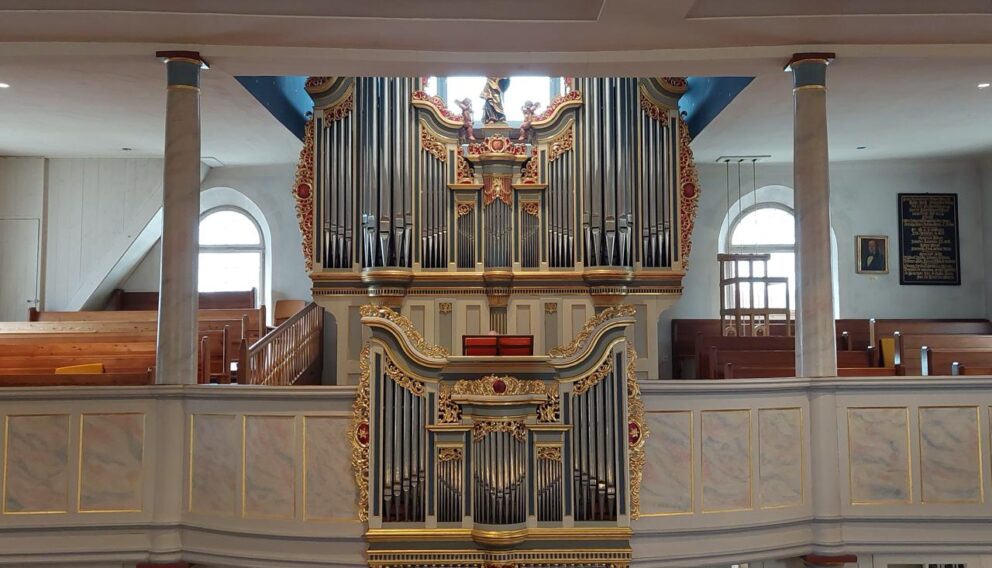
We’ll end this musing with an archival recording of the church organ from 2000. The accompanying text describes the recording as follows:
“The organ player of Bissingen church presents and plays the church’s old organ. It was built before 1914 when the old style of bellows system was still used. The recording is made from beneath the level where the organ was situated, near the big bellows. The blowing of the air to the organ pipes is more uneven than in a modern mechanized instrument and this can be heard.”
Please click here to listen to this recording: https://soundcloud.com/akueko/bissingen-the-old-bellows-of-bissingens-church-organ?in=akueko/sets/acoustic-environments-in
If interested more in the organ, please see the stupendously meticulous site of Ernst Leuze, together with soundbites: https://ernstleuze.de/marienkirche-bissingen/
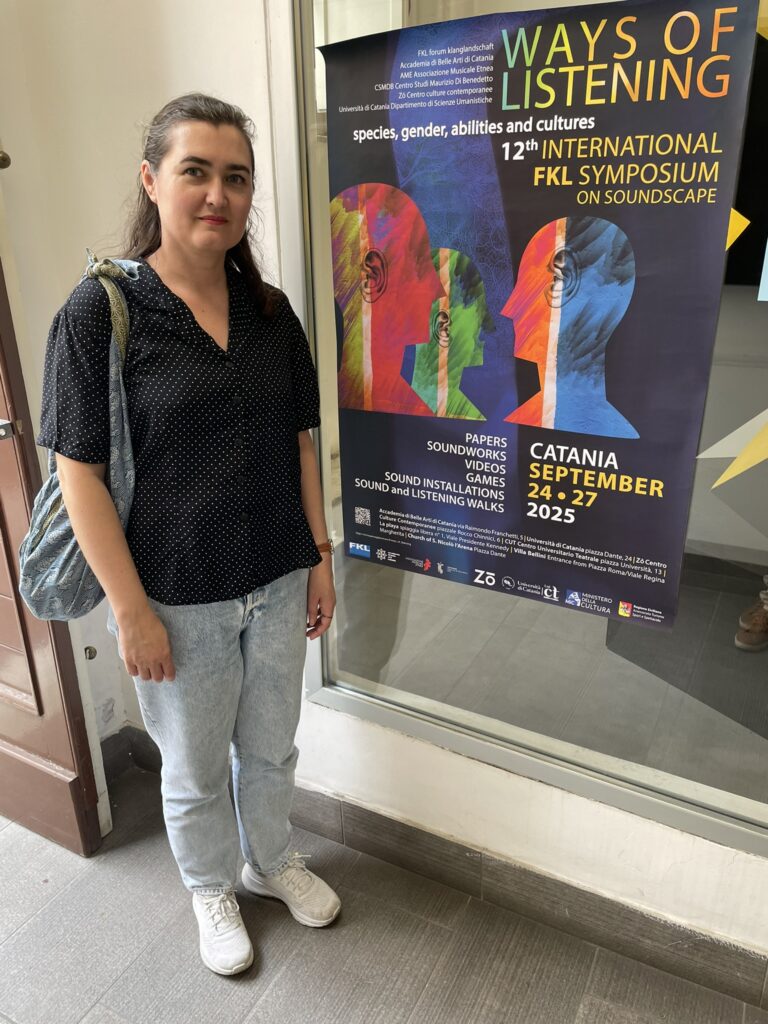
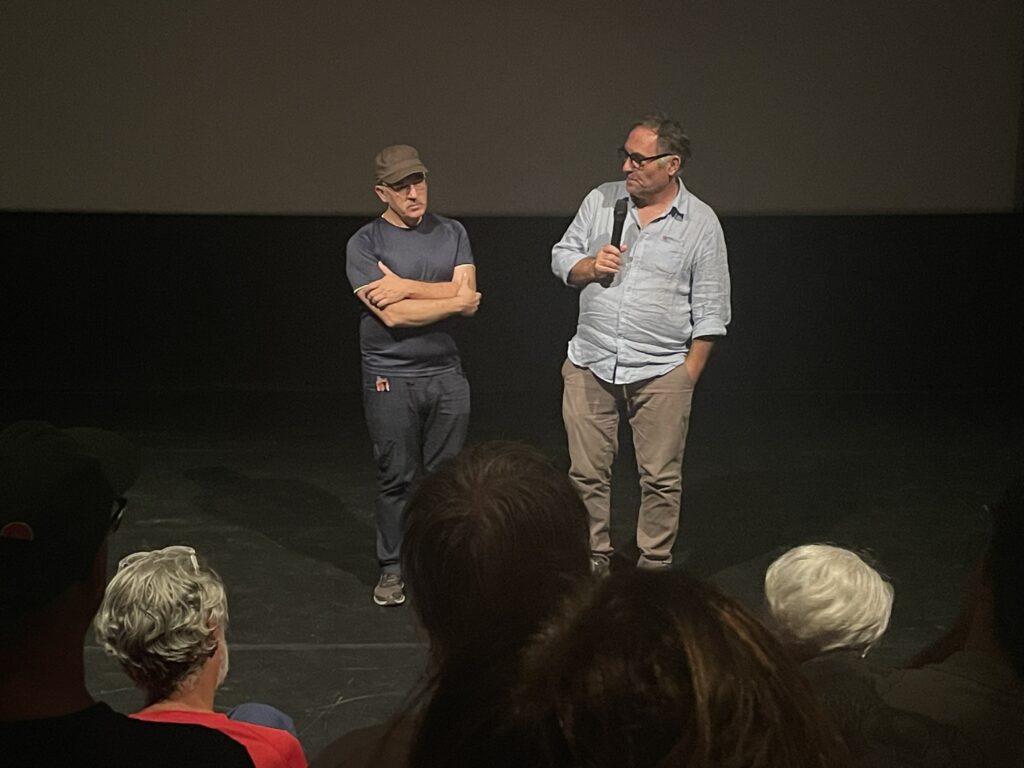
We were very fortunate to be invited as keynote speakers to the 12th International Symposium of Soundscape, organized by FKL and Abacatania. Me and Heikki Uimonen gave a talk on the current discussions of how to proceed after the fieldwork last Spring we have in the SOMECO project. Here’s a youtube video of the whole afternoon (the sound is a little challenging at times):
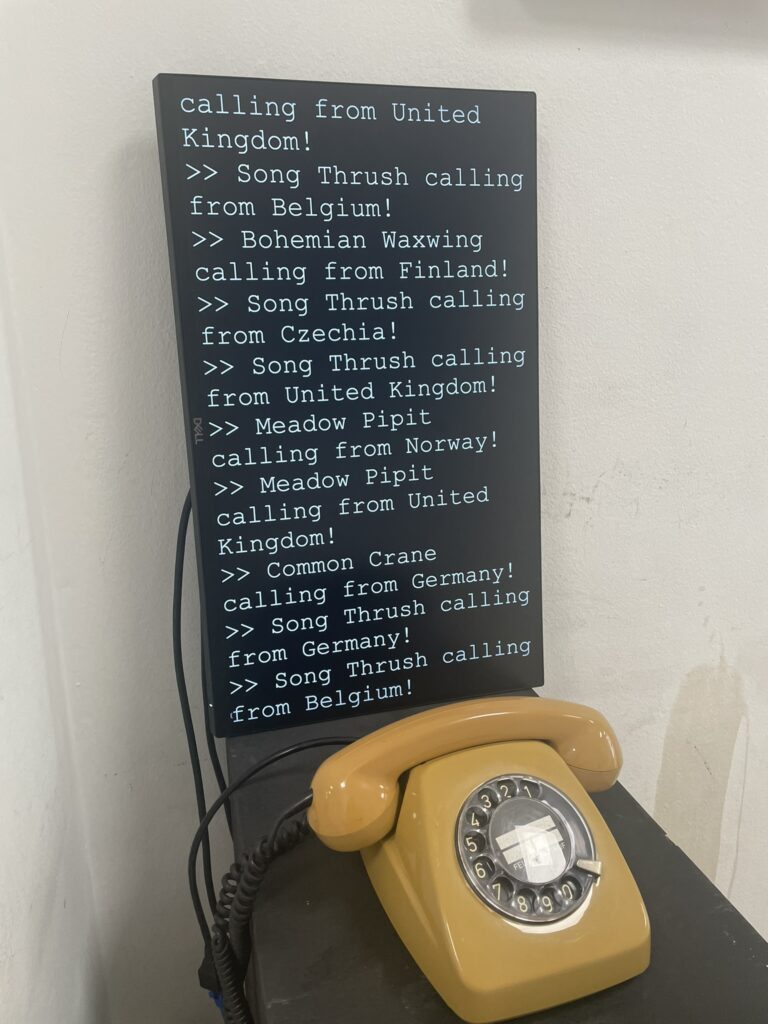
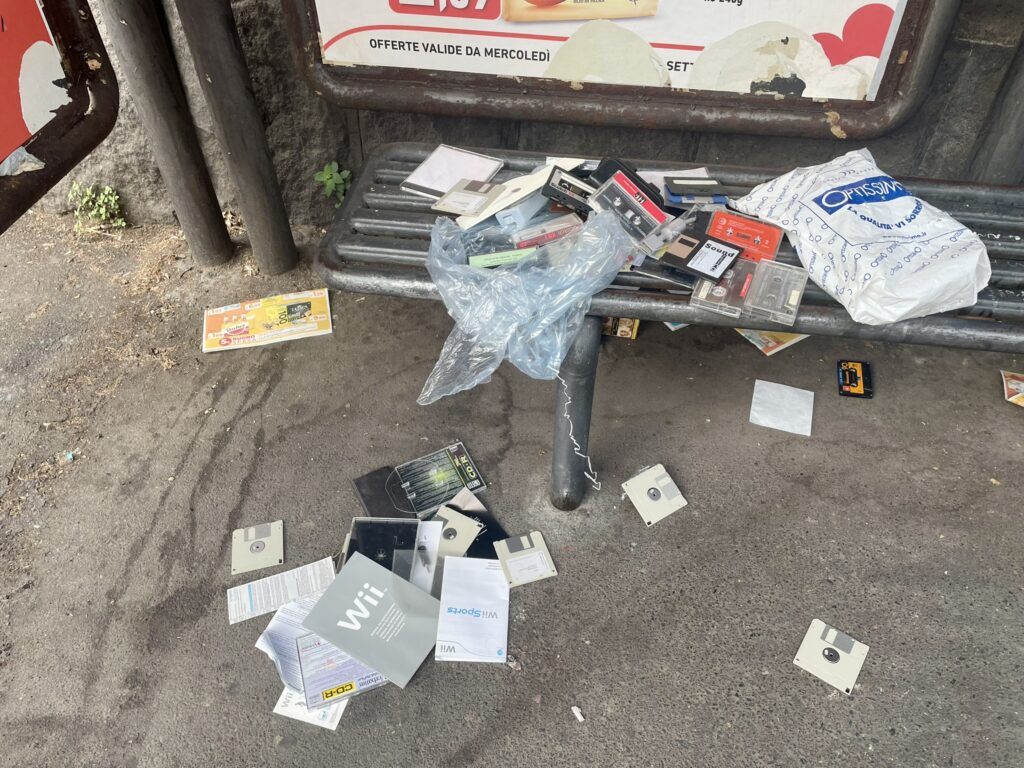
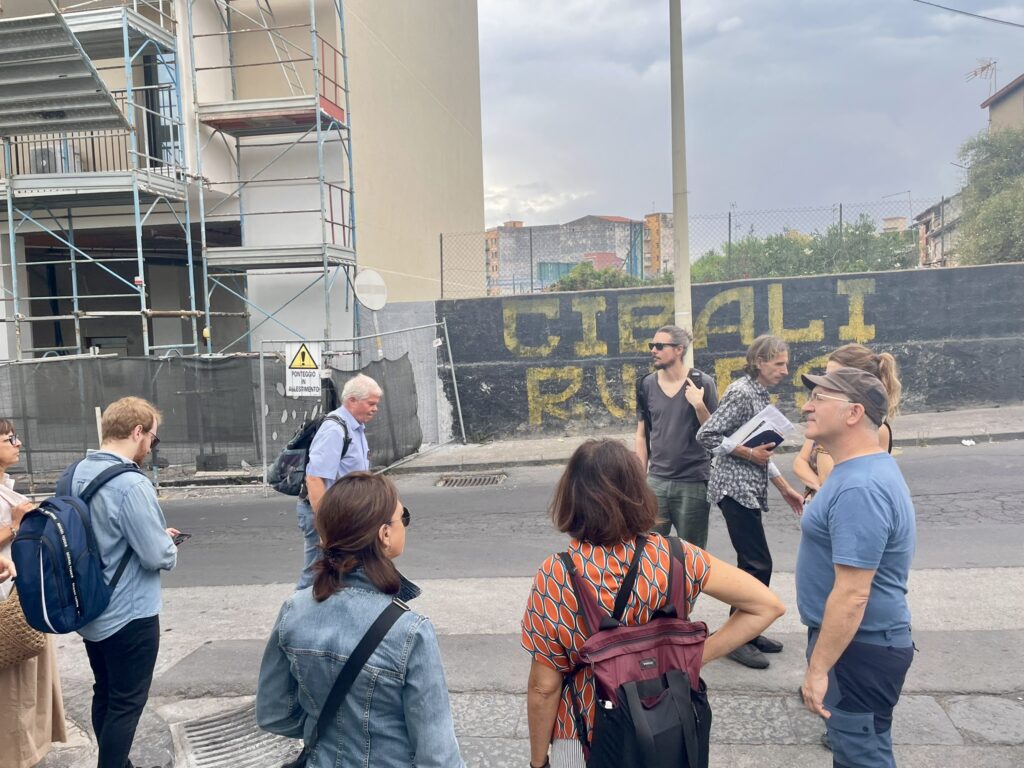
This was my first time in Sicily, but oh dear it won’t be the last. The conference was organized in a manner that allowed us participants to explore the city, just fascinating! There were listening walks, sound installations, sound performances, films and documentaries, all this in addition to the academic paper sessions. Met many new people, formed new friendships. The FKL does a lovely job in keeping the soundscape community together.
Minna Korhonen toimitti YLElle jutun melun terveysvaikutuksista — eli haitoista, vaikka voimakkaalla äänellä on eittämättä myös terveyttä edistäviä ja stressiä poistavia vaikutuksia musiikin, äänitaiteen ja tanssin muodoissa (toki huomioiden, että melu usein määritellään ei-toivotuksi ääneksi). Joka tapauksessa, oma osuuteni jutussa liittyy äänelliseen kulttuuriin, ennakoitavuuden ja hallinnan tunteeseen ääniympäristössä ja äänimaiseman käsitteeseen yleisemmin.
Juttu on kuunneltavissa YLE Areenassa: https://areena.yle.fi/1-74403724
Kirjaamme ”Background music cultures in Finnish urban life” perustuvan luentoni tallenne on katsottavissa tuubista. Luento oli osa Musiikkia kaikkialla ympärillämme -luentosarjaa.

The Sonic Mediations and Ecocritical Listening project (SOMECO) is on it’s second field work trip, now in Bissingen an der Teck, Germany. We are posting daily from the field for ten days or so, to our project blog (https://blogs.uef.fi/someco/blog/) and there’s little something on my bluesky wall (https://bsky.app/profile/merikyto.bsky.social).
So much work! But very much fun.
This is the continuation of World Soundscape Projects Five Village Soundscapes (1975) and Acoustic Environments in Change (2000). In case you’d like to read of the previous projects the books are here: https://urn.fi/URN:ISBN:978-952-7266-82-3 and the 2000 recordings can be listened to here: https://m.soundcloud.com/akueko/sets/acoustic-environments-in.


The Finnish Society for Acoustic Ecology turned 25. We had a celebratory seminar, discussions and an exhibition of done work at Kone foundations premises in Helsinki. What joy to have such good colleagues! #SoundscapeWorkSince1999

Riitta Monto jututti minua Turun Sanomien ja Turun yliopistn Humanisti vastaa -podcast-sarjaan 21.11.2024. Tästä haastattelusta tulikin todella laaja! Kiitos Riitalle kattavasta tutustumisesta tutkimuksiini.
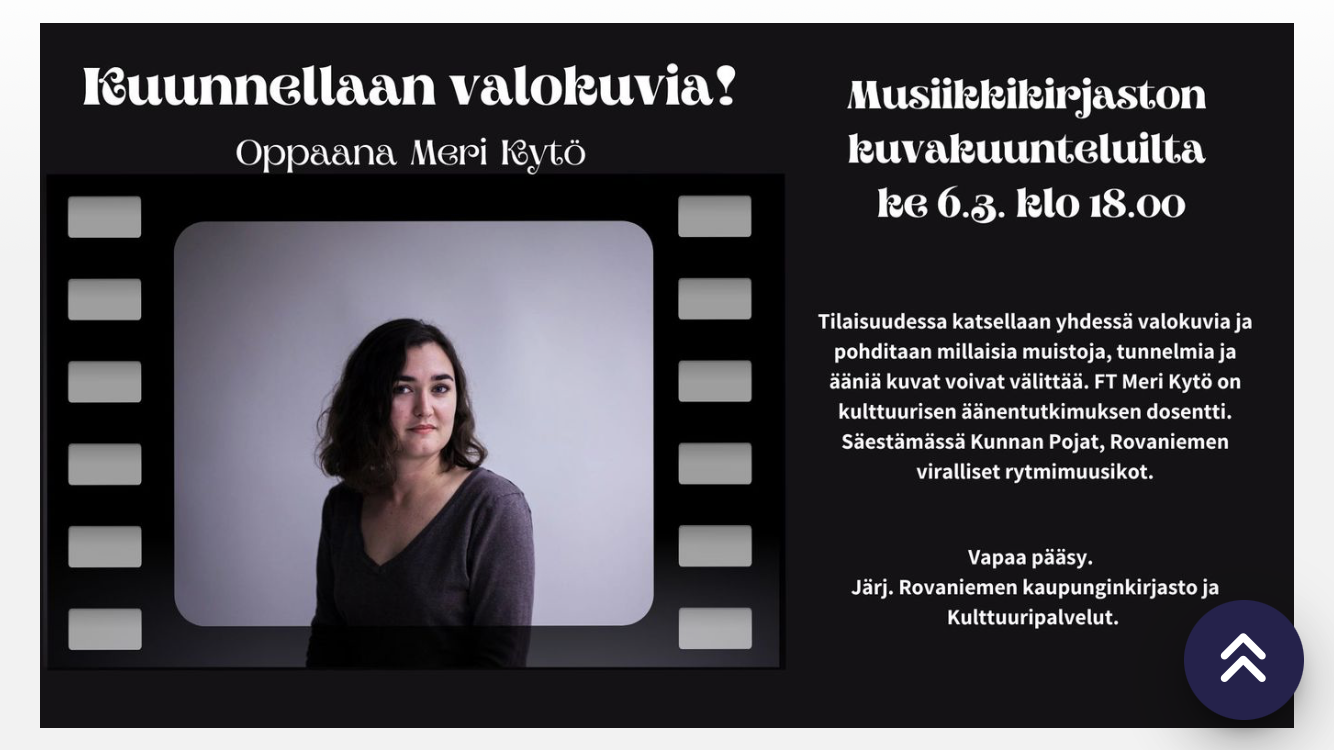
Tässä pieni ilmoitus 6.3. pidettävästä kuvien kuunteluillasta Rovaniemen kirjastolla:
https://tapahtumat.rovaniemi.fi/fi-FI/page/65d4a5c740a36809677acd96
”Vanhoja valokuvia on aina mukava katsella. Mutta oletko koskaan tullut ajatelleeksi, että niitä voidaan myös kuunnella? Musiikkikirjaston kuvakuunteluillassa katsellaan yhdessä ja rennossa hengessä valokuvia sekä pohditaan millaisia muistoja, tunnelmia ja äänimaisemia kuvat voivat välittää. Oppaana toimii kulttuurisen äänentutkimuksen dosentti Meri Kytö. Kunnan Pojat elävöittävät kuvia soitannallaan. Musiikkikirjastossa keskiviikkona 6.3. klo 18. Järjestäjänä Rovaniemen kaupunginkirjasto ja Kulttuuripalvelut.”
Kiitokset Marko Niemelälle kutsusta.