Re-post from Bissingen: 50 years is a long time

Feverishly analysing last years field work materials, here’s a re-post from the project blog we wrote with Kaj Ahlsved: https://blogs.uef.fi/someco/2025/03/20/50-years-is-a-long-time/

20.3.2025

50 years is a long time
Text: Meri Kytö & Kaj Ahlsved

Rhythmanalysis in soundscape studies has dominantly meant looking into circadian, daily rhythms. This project opens up a much longer span of time, practically of two generations.

Last Sunday happened to be “Goldene Konfirmation”, that is, the 50th anniversary of the confirmation of the Spring 1975. The mass started with the procession of the confirmands during the Praeludium.  

The priest had invited all 36 confirmands to attend. 29 of them showed up,  quite something. The priest had also prepared – going through the church archives – diplomas for the attendees. They contained short prayers and wishes from 50 years back they had written down as youngsters. With his melodious and well-articulated voice, the priest read them aloud, one by one.

The priest himself was younger than the confirmands, so in this way, he represented the memory of the church, threading the past and the present together. The congregation was listening to the thoughts of their younger selves with a close ear, and many were emotional. 

Digital technology was utilized throughout the entire sermon, as the texts of the hymns (psalms) were projected on a screen in front of the congregation. The projections did not include melodies, so those unfamiliar with the hymns (like us, the not-so-German researchers) were encouraged to pick up a hymnbook to sing along with the support of sheet music. In fact, only a few seemed to take a hymnbook. Nevertheless, the singing was robust and passionate.

From the perspective of cultural rhythms, this highlights continuity on a large scale: the familiarity of the melodies was essential for the singing. For us researchers, it was quite the opposite: we needed sheet music (even to get the melodies right).

It is hard to know if precisely the same hymns were sung 50 years ago, but according to how vocal the congregation was, one can assume that these hymns were songs that in some way have been a part of the singers’ lives. This is related to how hymns are a central part of cultural heritage – especially for older generations for whom singing religious songs outside congregational life, for example, in school, was quite normal. 

The hymn “Befiel du deine Wege” (“Commit your path”) was one of the songs in the sermon. The text and melody are both from the 17th century. For hymns, 50 years is not a long time. Pic: Kaj Ahlsved

All this led us to think more about how much emphasis is given to age in our work and how we understand the sonic life experiences of people of different ages. One of the archival recordings made by the Canadian group in 1975 is a recording of the children’s church service from Marienkirche. How would we present this recording to the schoolchildren now? Maybe their grandparents are the ones heard singing in it, with clear and soft voices? Maybe their parents remember the previous research group visiting in 2000 and are thinking the same question.

The children surveyed in 2000  would now be 35 years old, and most probably, some of them have kids of their own. These are questions that are essential in longitudinal projects like ours. People age, some pass on, and others are born, but the connection through place, community, memory, and soundscape stays as a resonating interface. For this the Marienkirches bells are also very important but more on that in another post.

In the school questionnaires, we ask what the children think will be the new sounds when, hopefully, the researchers will be coming to visit again in 2050, or even 2075? 50 years is, of course, a terribly long time for a 10-year-old to grasp. Our research team members are all close to 50 or more and actually just celebrated one birthday here in Bissingen at Pizzeria Altibelli. No wonder we are interested in the long span of things, it’s a tendency one gets when getting older. For us, this kind of memory work is easy.

We’ll end this musing with an archival recording of the church organ from 2000. The accompanying text describes the recording as follows:

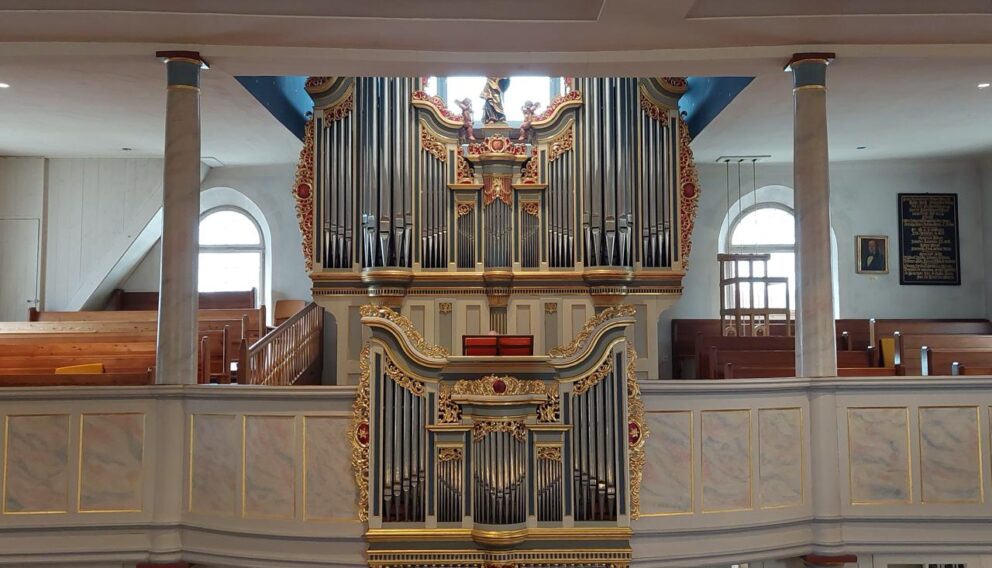
“The organ player of Bissingen church presents and plays the church’s old organ. It was built before 1914 when the old style of bellows system was still used. The recording is made from beneath the level where the organ was situated, near the big bellows. The blowing of the air to the organ pipes is more uneven than in a modern mechanized instrument and this can be heard.”

Please click here to listen to this recording: https://soundcloud.com/akueko/bissingen-the-old-bellows-of-bissingens-church-organ?in=akueko/sets/acoustic-environments-in

If interested more in the organ, please see the stupendously meticulous site of Ernst Leuze, together with soundbites: https://ernstleuze.de/marienkirche-bissingen/
Ways of Listening in Catania

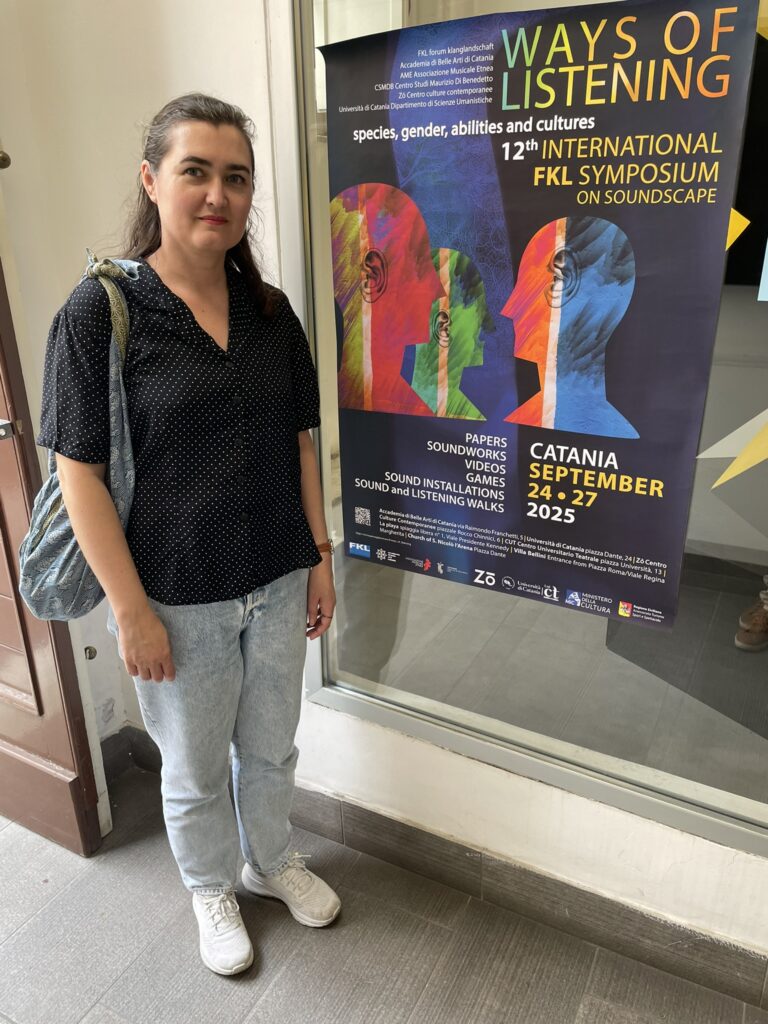
We were very fortunate to be invited as keynote speakers to the 12th International Symposium of Soundscape, organized by FKL and Abacatania. Me and Heikki Uimonen gave a talk on the current discussions of how to proceed after the fieldwork last Spring we have in the SOMECO project. Here’s a youtube video of the whole afternoon (the sound is a little challenging at times):

This was my first time in Sicily, but oh dear it won’t be the last. The conference was organized in a manner that allowed us participants to explore the city, just fascinating! There were listening walks, sound installations, sound performances, films and documentaries, all this in addition to the academic paper sessions. Met many new people, formed new friendships. The FKL does a lovely job in keeping the soundscape community together.

Vierailu Tiedeykkösessä

Minna Korhonen toimitti YLElle jutun melun terveysvaikutuksista — eli haitoista, vaikka voimakkaalla äänellä on eittämättä myös terveyttä edistäviä ja stressiä poistavia vaikutuksia musiikin, äänitaiteen ja tanssin muodoissa (toki huomioiden, että melu usein määritellään ei-toivotuksi ääneksi). Joka tapauksessa, oma osuuteni jutussa liittyy äänelliseen kulttuuriin, ennakoitavuuden ja hallinnan tunteeseen ääniympäristössä ja äänimaiseman käsitteeseen yleisemmin.

Juttu on kuunneltavissa YLE Areenassa: https://areena.yle.fi/1-74403724

Field work in Bissingen an der Teck

Charting the acoustic profile of the bells of Marienkirche with Anne Tarvainen.

The Sonic Mediations and Ecocritical Listening project (SOMECO) is on it’s second field work trip, now in Bissingen an der Teck, Germany. We are posting daily from the field for ten days or so, to our project blog (https://blogs.uef.fi/someco/blog/) and there’s little something on my bluesky wall (https://bsky.app/profile/merikyto.bsky.social).

So much work! But very much fun.

This is the continuation of World Soundscape Projects Five Village Soundscapes (1975) and Acoustic Environments in Change (2000). In case you’d like to read of the previous projects the books are here: https://urn.fi/URN:ISBN:978-952-7266-82-3 and the 2000 recordings can be listened to here: https://m.soundcloud.com/akueko/sets/acoustic-environments-in.

FSAE 25 years!

The Finnish Society for Acoustic Ecology turned 25. We had a celebratory seminar, discussions and an exhibition of done work at Kone foundations premises in Helsinki. What joy to have such good colleagues! #SoundscapeWorkSince1999

Book coming out soon! (update: it’s out!)

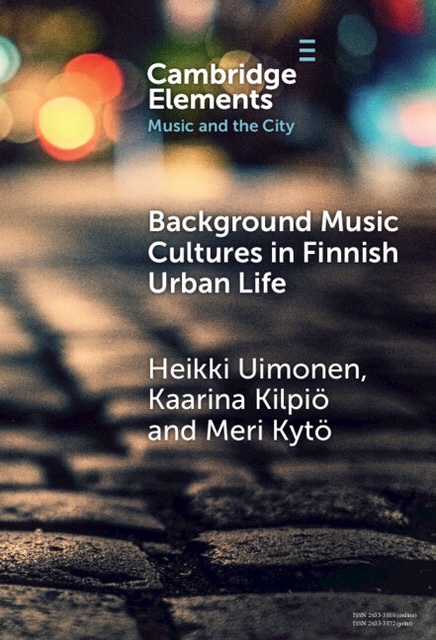
Our team effort ”Background music cultures in Finnish urban life” is soon out from Cambridge University Press! We expect the online version to be openly available on April 30th. (UPDATE: it’s already out!)

This is a result of a four-year project with my absolutely fabulous colleagues Heikki Uimonen and Kaarina Kilpiö.

The front cover is generic for the series (music and the city) which actually suits quite well with the topic of the book.

More horn tooting in May!

Front cover.

Sensory Media Anthropology Network now in EASA

Very happy to announce that our NOS-HS funded Nordic network will continue under the European Association of Social Anthropologists: https://www.easaonline.org/networks/sensory_media/

Our aim is to bring the subfields of media anthropology and sensory anthropology into sustained dialogue, facilitating an integrated theorisation of media and the sensory. For contact, mailing list, events and future publications check out the EASA site.

Performance piece at Silence festival

Meri performing at Kaukonen village, pic by Jouni Porsanger.
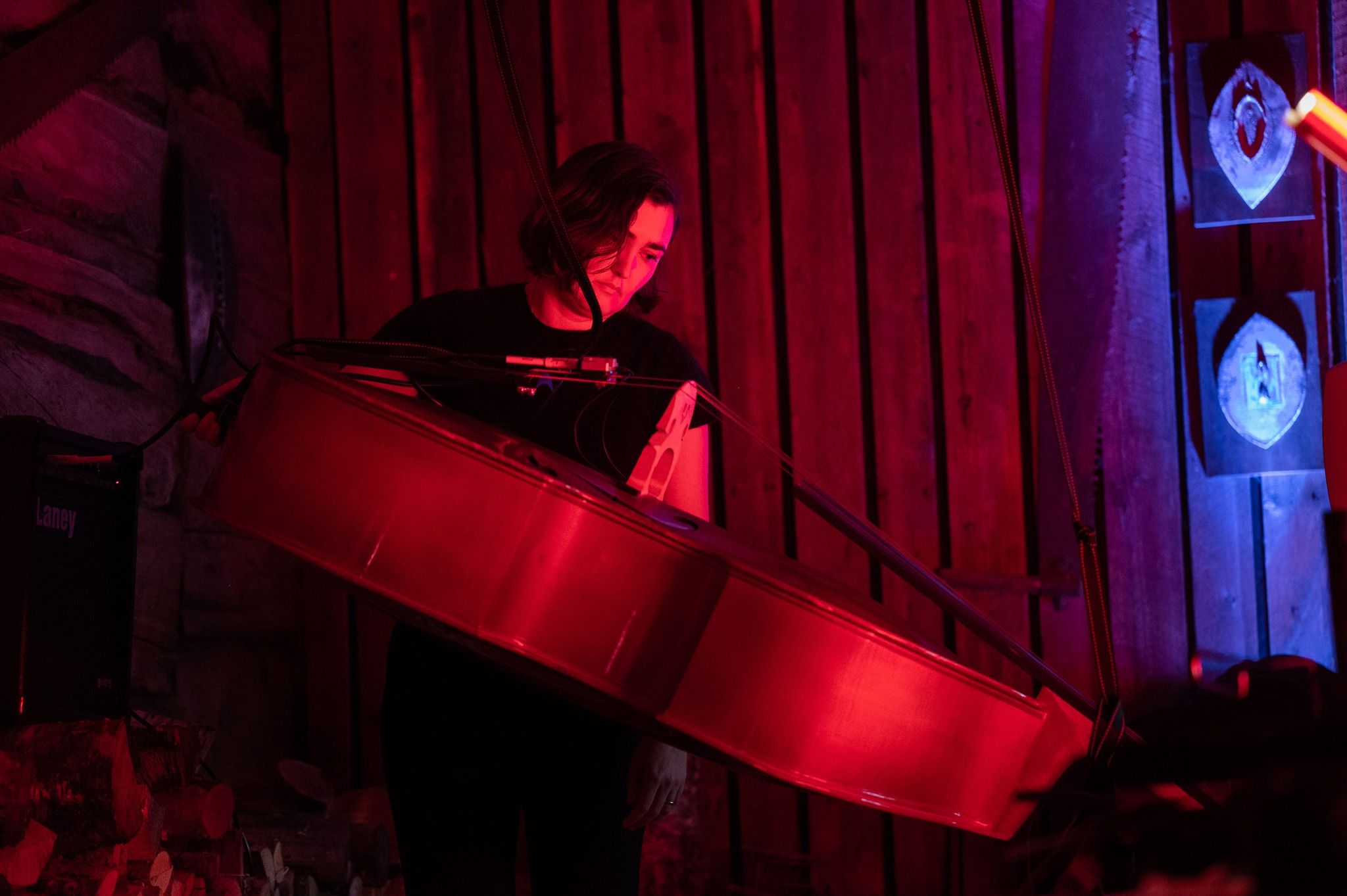
The double bass swinging away. Picture: Jouni Porsanger

I was invited by Lauri Sallinen and Karita Tikka, the artistic directors of the Silence festival at Kaukonen village near Kittilä, to make and perform a soundscape piece at a small log cabin called “Villa Magia”. The festival is running on it’s 13th year, a mixture of circus, music and collaboration acts. It is a gorgeous, free spirited event under the midnight sun that lasts for one weekend every June.

During one week I recorded the surrondings of the village and then added some sonic comments to them by touching different objects and materials I found in the cabin (plus my double bass). The work ended up having the name “Sora, vire, kytö”. The name plays with ambiguities (“gravel, breeze, swidden” or also “discord, tune, my surname”), along with the festival theme of the elements. The name was coined up at the festival office which is just as well, because I would probably have named it something more boring like “Kaukonen soundscape”.

I did three performances in the space lit by beautifully by Jukka Huitila. Here are the soundscape recordings I used, listed in a handout for the audience:

Soundscape recordings of Sora, vire, kytö
– Stepping at the cabin
– Nestmaking sparrows picking between the logs at Ojanperä cottage
– A walk across the wooden Accademia bridge in Venice
– Night time crickets at Ezine, Turkey
– Cicadas singing during the day at Kowloon park, Hong Kong
– Kaukonen’s chainsaw sculptor Vesa at work
– The dogs of Rengastie with passing cars
– Brewing morning coffee at Ojanperä cottage. In the background one can hear songs performed by Eero Magga, ”Pohjolan yö” (Night in the North, comp. Godzinsky, lyrics Nuorvala) ja ”Onnen kaipuu” (Longing for happiness, comp. & lyrics Pedro de Pajaro, aka Pekka Lintula). ”Pohjolan yö” is originally from the film Salakuljettajan laulu (Smugglers song, 1952, dir. Lasse Pöysti), telling a story of rationing after the second world war and how buying of secondary commodities – like coffee – was being prevented.
– Spruces, aspen and birches sway in summer wind in front of Villa Magia
– Stepping out from the cabin

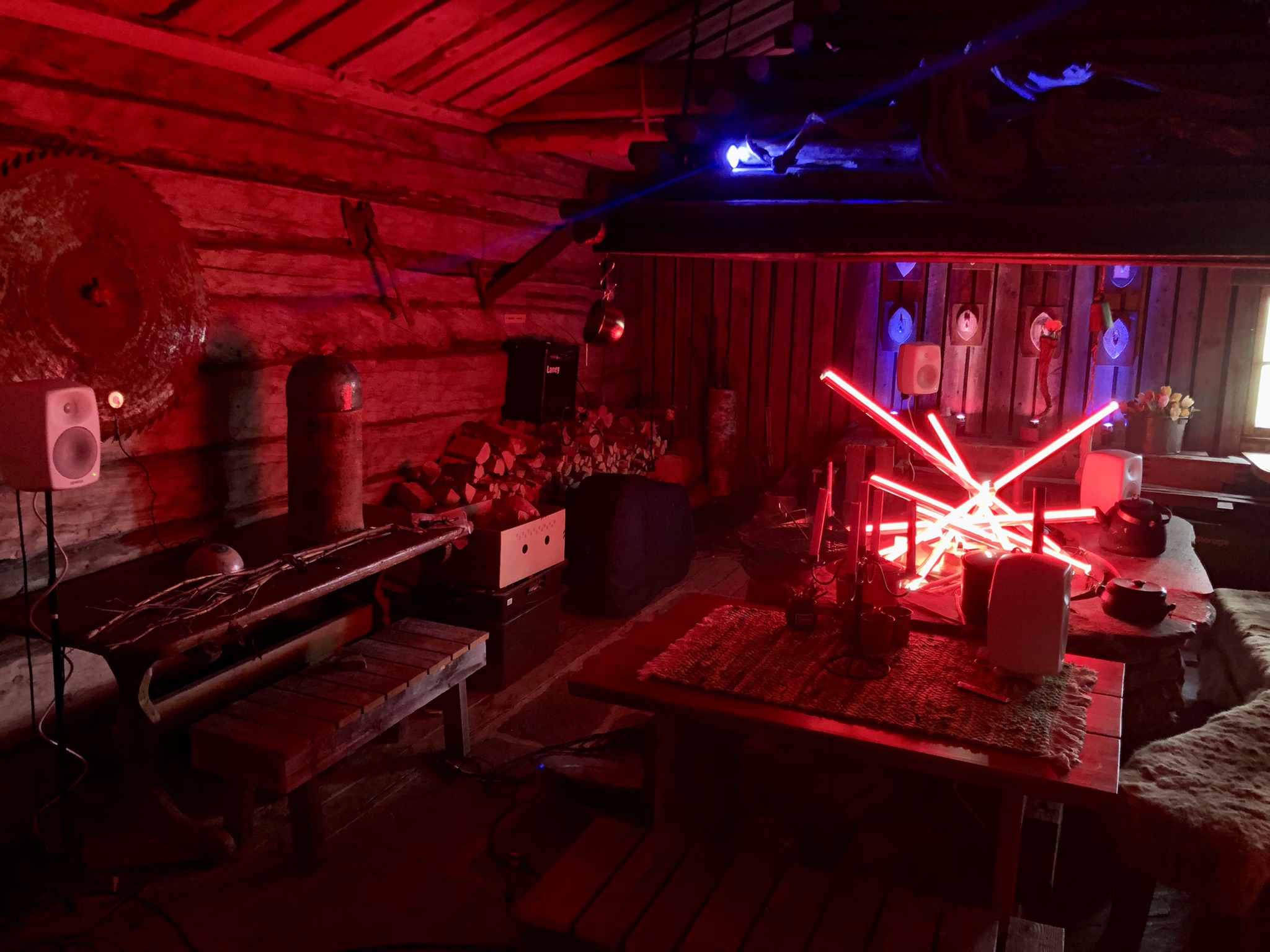
Between and during these recordings I changed shoes and stepped around the wooden cabin floor, answered to the sparrows by knocking on the window, made water drip from the ceiling through some woolen yarn onto a large metal lid that swung nicely on the floor when I crushed some dried reeds and rocks on it (piezo amplified), swung my double bass that I had filled with dried peas and hung from the ceiling (amplified as well), and finally rubbed my palms and some sawdust on a beautiful rusted circular saw blade that was hanging on the wall there (piezo amplified, this too). At the end I stepped again out from the cabin, asking the audience to follow me to the yard, to experience some acoustic Kaukonen.

Here are the programme notes in Finnish:

Sora, vire, kytö -ääniteoksessa eri äänimaisemat koskettavat toisiaan synnyttäen äänten ja tilojen, maisemien duettoja. Äänitaiteilija Meri Kytö tuo Kaukoseen eri paikoista kokoamiaan äänimaisemaäänityksiä, jotka alkavat soida yhdessä Kaukosen äänten kanssa. Villa Magian tulipirtti laajenee äänelliseksi kokonaisuudeksi, joka sisältää monia äänellisiä polkuja. Meri Kytö on musiikin ja äänen tutkija sekä kulttuurintutkija Turun Yliopistossa. Teoksessaan Meri hyödyntää tilan omia ääniä, pienimuotoista äänentoistoteknologiaa, itserakennettuja kontaktimikrofoneja ja jo hieman ikääntynyttä Edirol 09 -kovalevytallenninta.”

The work ended up being a somewhat organic whole. It would have benefitted from a few days of more work and balancing out the different elements but I’m quite ok with it. I had the most enjoyable discussions with people who came and listened to it, these really were the best take-away from the festival. It’s lovely to hear the different connotations and physical reactions people have with this kind of quite mundane, modest and low-fi sounds when given a little allocated time. I also learned that Stihl is the go-to brand in Kaukonen chainsaw sculpting scene.

Inside the log cabin during rehearsal. The rusty saw blade on the left. I used six Genelecs surrounding the space. Jukka Huitila’s fiery light sculpture is sitting in the fireplace. Picture: MK.
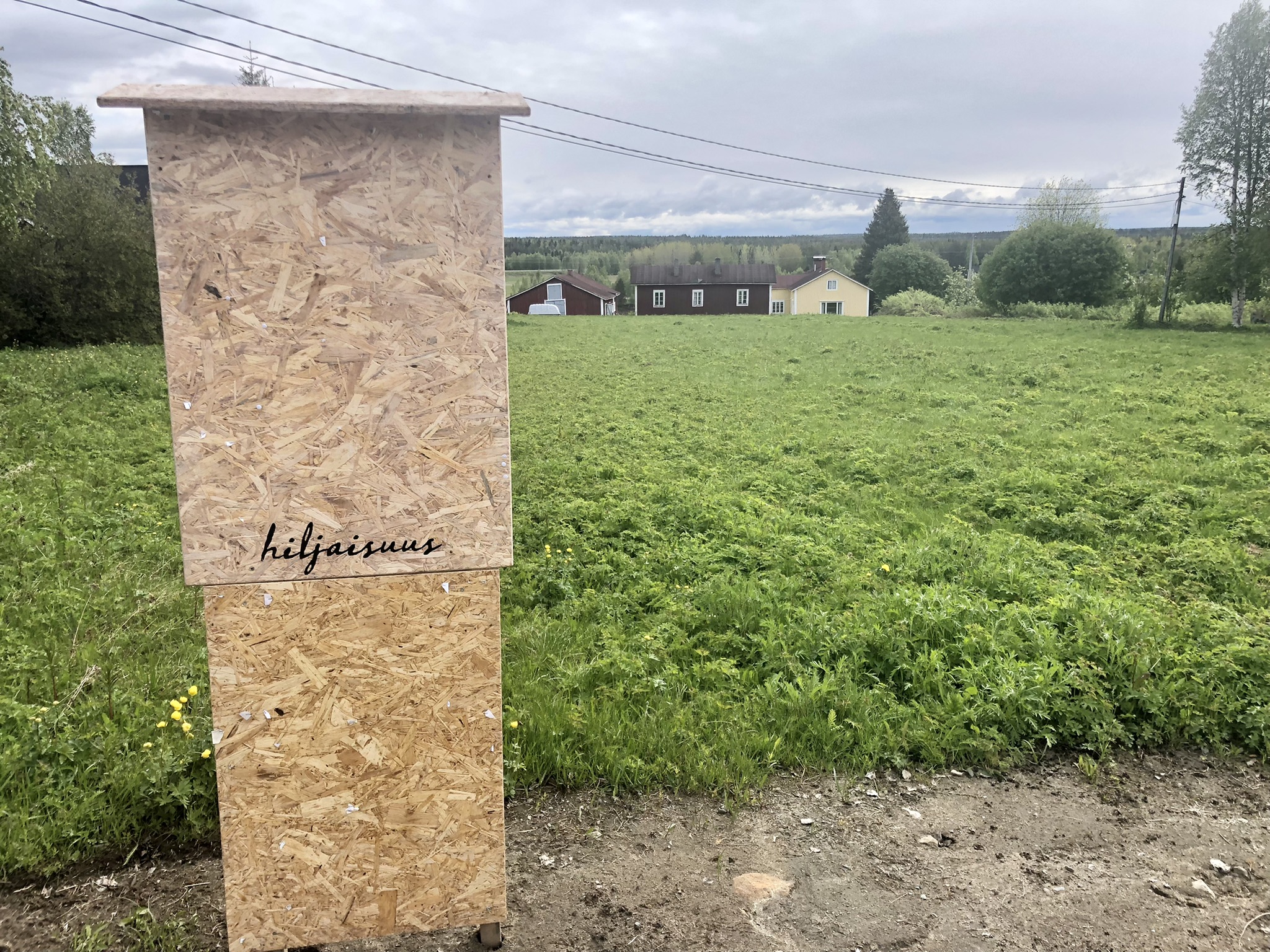
A picture from Kaukonen main road. With a notice board not yet giving other notice than silence (hiljaisuus). Picture: MK.